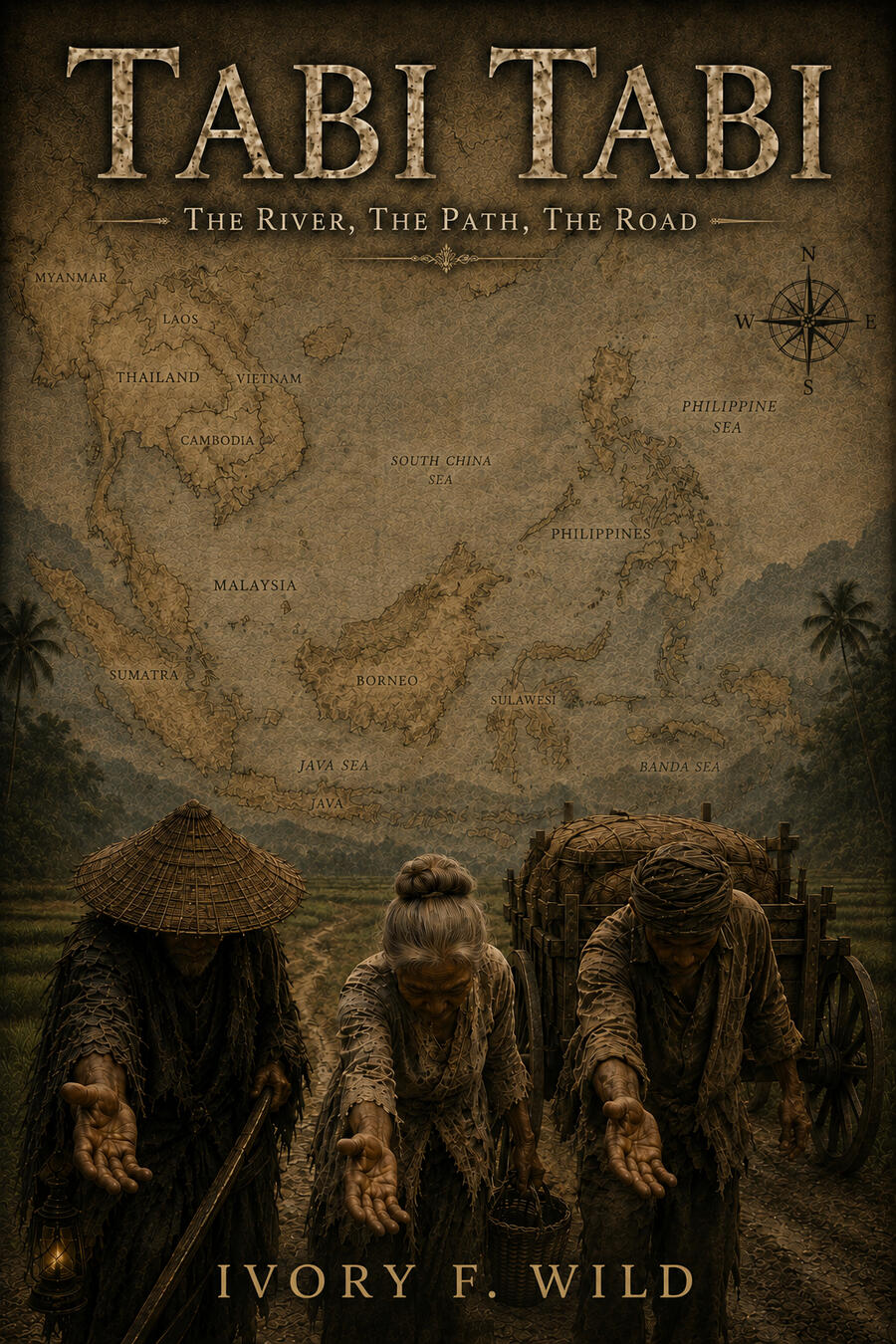
THE RIVER
Tabi-Tabi: Book One
The fog does not roll in. You simply notice it has arrived — the way grief arrives, the way debt arrives, the way the important things always do.
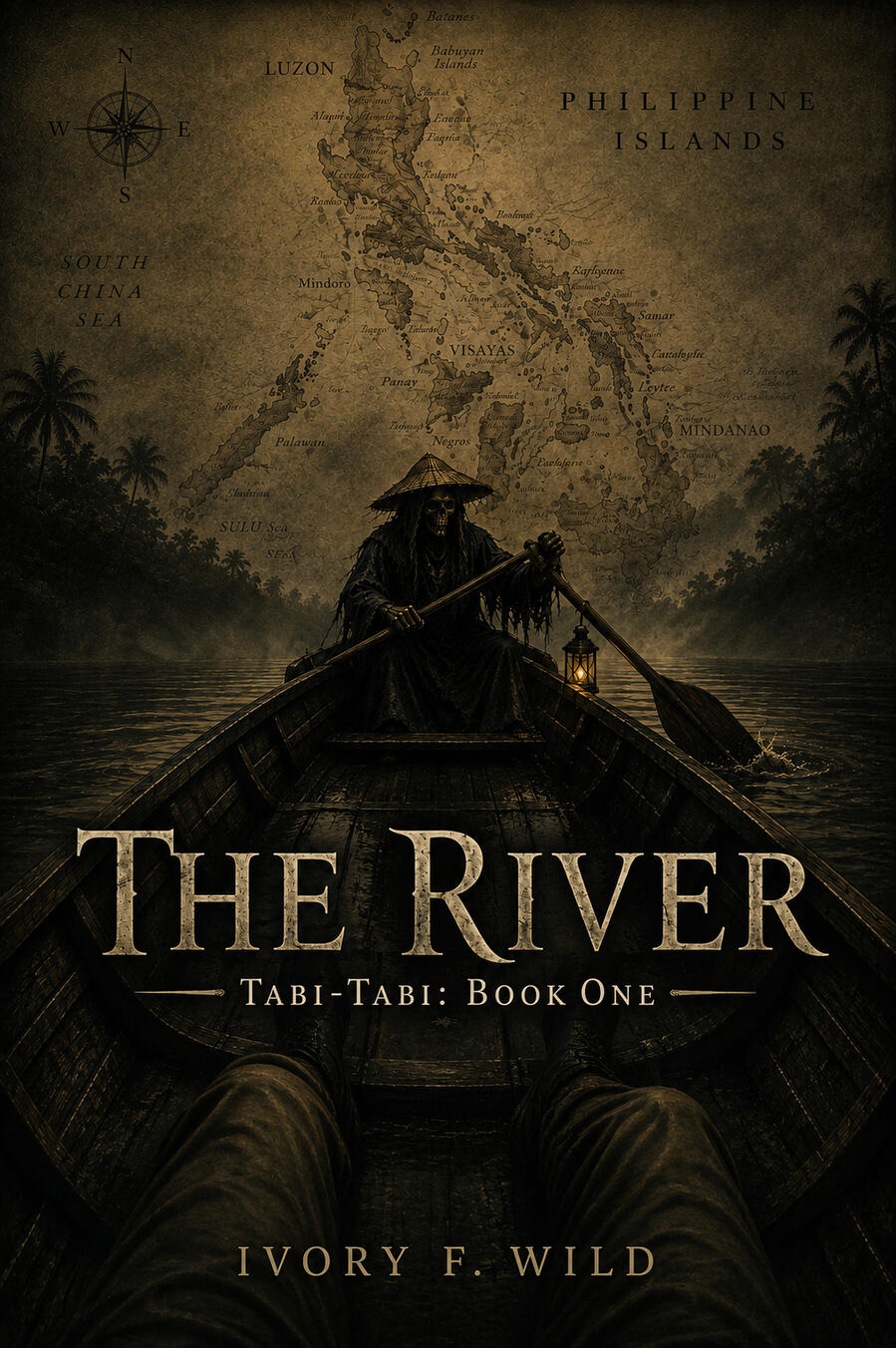
You are standing on the bank of a river with no name, and the only way across is by boat. The boatman has never once been late, and he never hurries. Eleven miles to the other side, he tells you. Eleven souls to pay the toll.Across the black water, the fog opens onto eleven ordinary lives — a father who brings home more than he bargained for, a widow who finds a drying pond too full of fish, a logging crew that hears something laughing in the trees, a husband who keeps setting two places at the table. Each one reached for something they were owed, and found that the old, hungry things of the Philippine dark keep better accounts than the living do.Every story ends with one more object dropped into the bottom of the boat. Every mile, the boatman is watching to see what you do with what you're shown.The River is the first crossing of the Tabi-Tabi trilogy: eleven tales of Philippine folk-horror, told by a guide who has never once lost a passenger — and never once let one leave untouched.
THE PATH
Tabi-Tabi: Book Two
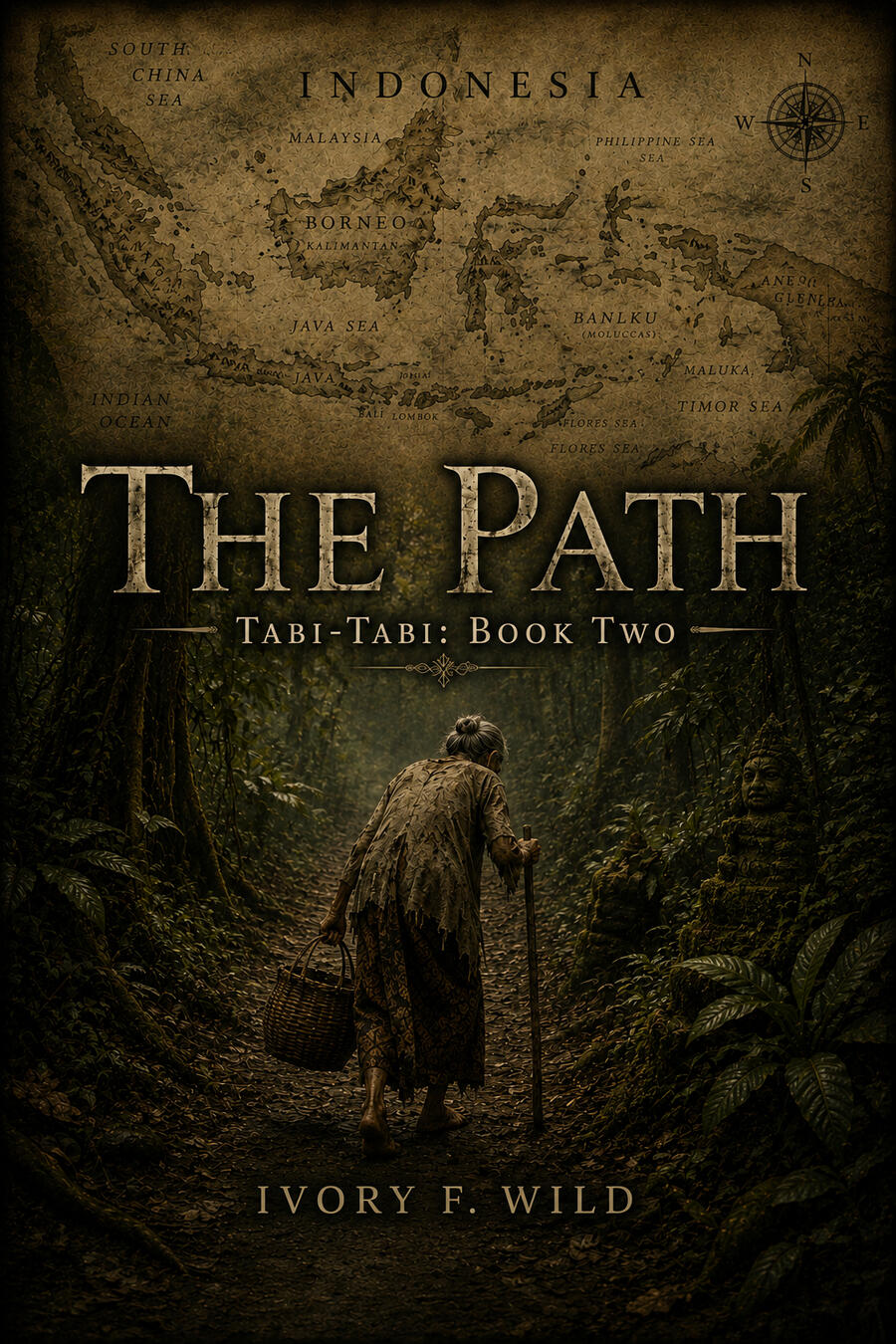
The path does not begin. It is simply there when you look down — and somewhere ahead of you, an old woman with a basket has already started walking.She does not wait, and she does not look back. She talks the whole way, and the price of the crossing is listening — closely, without once looking at whatever moves between the trees — because the jungle has never been empty, and it has more patience than you have years.
Eleven miles, eleven stories, as the fog opens onto a rice terrace, a shophouse, a family compound: ordinary people across Java, Bali, and Kalimantan who signed without reading, kept what should have been let go, or simply stopped placing the morning's offering. What answers them is old, and it has never been interested in whether they meant it.The basket at her side grows heavier with every tale. By the time the trees thin and the fog finally lifts, you will know exactly what it's been collecting — and exactly what you've been paying with the whole way there.The Path is the second crossing of the Tabi-Tabi trilogy: eleven tales of Indonesian folk-horror, guided by someone who has never once let a listener wander off alone.
THE ROAD
Tabi-Tabi: Book Three
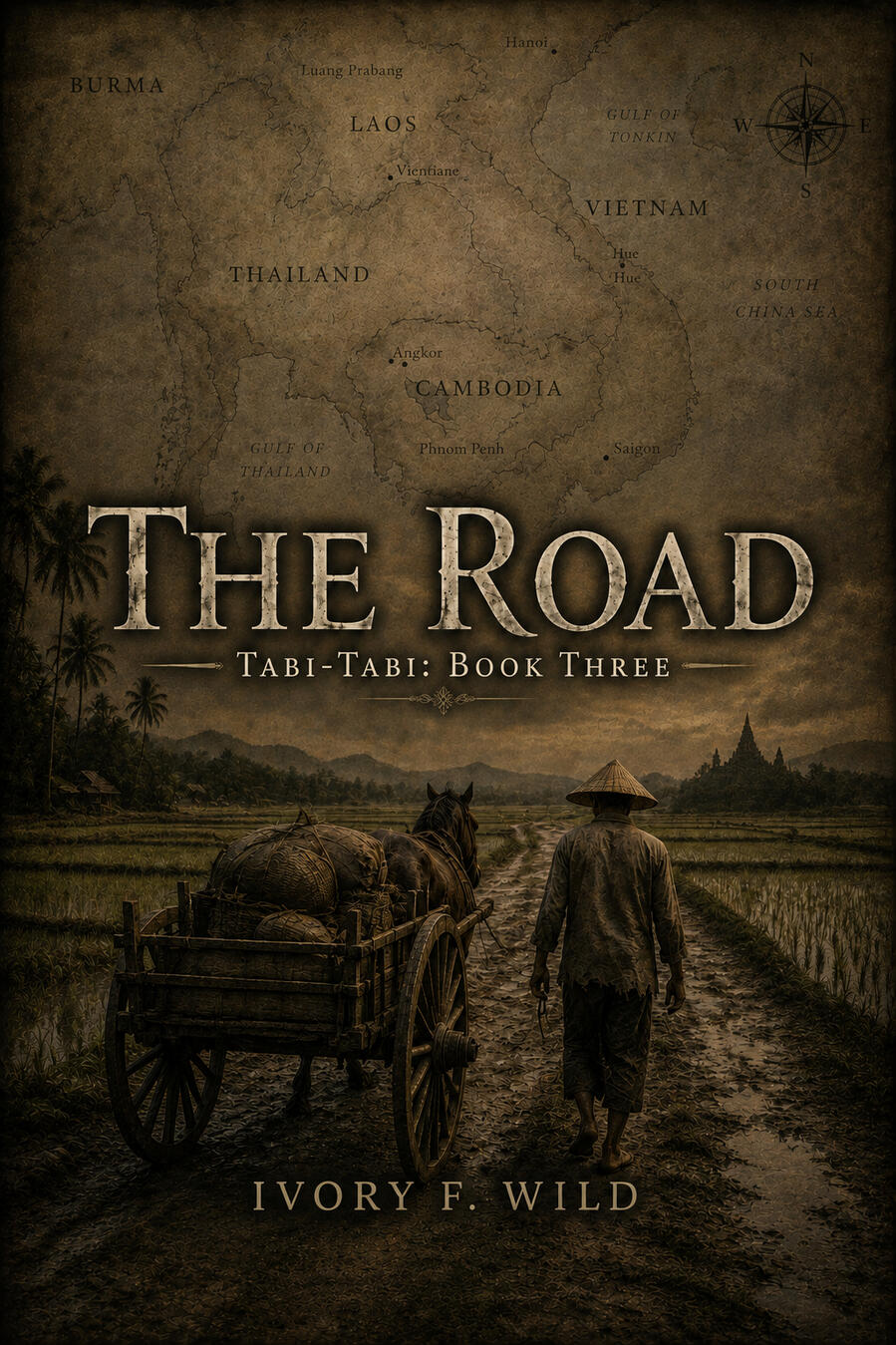
The road is red — the red of laterite earth, the red of the dry season — and it goes forward into the dark the way it always has, with the patience of a thing that has never once needed to hurry.Ahead of you: a cart, a small horse, and an old man walking at its head, who has made this crossing so many times that the road and the walking have become the same thing. Eleven miles to the other end, and at each one he reaches into the dark at the roadside and adds something to the cart — a cloth bag, a string of beads, a pair of cracked reading glasses, a child's sandal. The last, smallest thing someone was holding when they didn't make it the rest of the way.Across Thailand, Cambodia, Laos, and Malaysia, eleven lives come apart at the seams of what they kept quiet: a hunger fed too long, a debt of luck never repaid, a courtesy owed to something too tall to look at. Each story closes with one more object in the cart, one more name said without judgment — because judgment was never the old man's to give.The Road is the third and final crossing of the Tabi-Tabi trilogy: eleven tales of folk-horror from the mainland dark, and the last stretch of a road that has been open a very long time.
THE LAST ELEVEN MILES
The Complete Tabi-Tabi Trilogy
Three crossings. Three guides — a boatman, a woman with a basket, an old man with a cart — who never once, across thirty-three stories and three countries' worth of folklore, gave you their names.The Last Eleven Miles gathers the complete Tabi-Tabi trilogy — The River, The Path, and The Road — into a single journey, with new connecting passages that carry you from one crossing straight into the next.
Thirty-three tales of Southeast Asian folk-horror, from the drowned things of the Philippine dark to the hungry ghosts of the mainland interior, each one paid for by someone who reached for a little more than they were owed — and found something older reaching back.Every mile, an object goes into the basket, the cart, the bottom of the boat: the last thing a hand was holding before it let go. By the final crossing, you will understand exactly whose hand has been guiding you the entire way, and why it never once let go of yours.The complete trilogy. One road. Eleven miles, three times over.